What is Generative Engine Optimization? Explain GEO for AI-driven Search
Marcela De Vivo
Marcela De Vivo
March 11, 2026
The transition from SEO (Search Engine Optimization) to GEO (Generative Engine Optimization) isn’t just an upgrade—it’s a survival strategy. Businesses need to rethink their digital strategy. The goal is no longer just ranking on Google—it’s ensuring your brand appears where AI engines pull their data from.
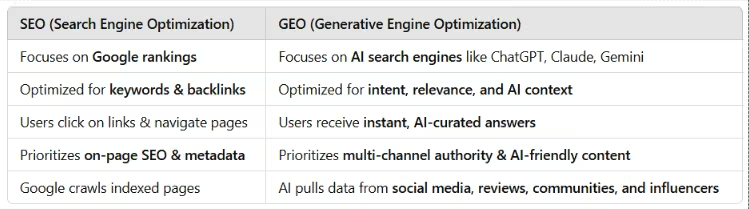
Generative Engine Optimization (GEO) is an advanced form of digital marketing tailored specifically to the emerging landscape of AI-driven search engines, such as ChatGPT, Claude, and Gemini. Unlike traditional SEO, which centers exclusively on improving visibility within search engine results pages (SERPs), GEO strategically positions your brand to be recognized and cited by generative AI engines that provide conversational and contextually relevant answers to user queries. In essence, GEO ensures that your business is discoverable in this new AI-driven era, where search is no longer exclusively dependent upon standard search engines like Google, but increasingly based on aggregations from AI-powered platforms.
Generative engine optimization represents a paradigm shift from traditional search practices. As generative AI search engines like ChatGPT, Claude, and Gemini become predominant information sources, businesses must adapt to maintain visibility. Understanding generative search optimization—and precisely how these AI systems process and surface information—is crucial for brands aiming to remain relevant within the modern digital landscape.
Generative search optimization significantly transforms product discovery processes by delivering targeted, highly relevant recommendations through conversational AI engines. Unlike traditional product searches—which rely heavily on static keyword queries—generative search optimization for product discovery interprets detailed user intent and conversational prompts, thereby providing personalized, context-driven recommendations. By implementing generative search optimization methodologies, businesses can ensure products are prominently positioned and accurately recommended by AI platforms, ultimately facilitating deeper user engagement and more successful transactions.
How GEO Differs from SEO for AI-Driven Search (Channel, Content, Signals)
The critical differences between generative engine optimization (GEO optimization) and traditional SEO (geo SEO) lie in their targeted platforms and methodologies. Traditional geo SEO typically involves optimizing content around location-based keywords aimed at improving visibility within Google and other classical search engines. GEO optimization, conversely, expands this concept to AI-driven generative platforms, focusing on contextual relevance, conversational content, multi-channel visibility, and digital trustworthiness. While geo SEO relies on keyword-driven content and structured data to appear prominently in traditional SERPs, geo optimization's objective is ensuring AI engines frequently reference your content as authoritative, trustworthy, and contextually appropriate.
The fundamental shift? Instead of optimizing for Google, you need to optimize for generative engines like ChatGPT, Claude and Gemini.
GEO Strategy: From Web Pages to Cross-Channel Signals AI Recognizes
If AI search engines are the new gatekeepers of information, your business strategy must evolve. Instead of competing for Google rankings, you must position yourself as a trusted source AI platforms pull from.
1. How to Establish Multi-Channel Authority for GEO
In the traditional SEO landscape, businesses focused on optimizing their website content to rank on Google. However, AI-driven search engines don’t just rely on a single source—they pull insights from a vast digital ecosystem. Instead of ranking on a search results page, your goal in the AI era is to be present, cited, and referenced across multiple trusted sources that AI models consider authoritative.
AI engines like ChatGPT, Claude, Grok, and Gemini curate responses based on content aggregation, contextual credibility, and sentiment analysis. If your brand isn’t frequently mentioned across various online channels, AI won’t see you as a credible source—and you’ll be invisible in the AI-powered search revolution.
Here’s how you can build, expand, and solidify your authority across the digital ecosystem to ensure your business is a primary source of information for AI-driven search.
Guide: Select Creators and Formats That Drive Trusted AI References
AI prioritizes real-world user experiences and social proof, which means influencer content carries significant weight in AI-generated search results. Unlike Google’s traditional ranking system, where backlinks determine authority, AI engines consider what trusted voices say about your brand.
Why It Matters: AI pulls insights from influencers’ reviews, product comparisons, tutorials, and testimonials to answer user queries.
Action Steps:
Partner with niche influencers who align with your brand’s audience and values.
Sponsor product review videos, walkthroughs, and tutorial content.
Encourage influencers to share real experiences, case studies, and results.
Engage in video marketing—AI prefers video-based responses over static text content.
Actively collaborate on podcasts and panel discussions to position your brand as an industry thought leader.
Example: A fitness brand looking to appear in AI-driven search results should sponsor workout influencers who create comparisons, testimonials, and performance-based reviews of their products. AI will recognize these sources as reliable and cite them in responses.
Turn Expertise into Citable, Structured Resources
AI engines prioritize expertise over general content, meaning brands that publish deep, insightful thought leadership pieces have an edge. Unlike Google’s focus on keyword insertion and backlinks, AI assesses content depth, industry authority, and credibility to determine whether a source is worth citing.
Why It Matters: AI systems cite expert opinions, data-driven insights, and authoritative industry blogs to provide well-rounded answers.
Action Steps:
Publish long-form, high-quality content that answers in-depth industry questions.
Write expert guides, whitepapers, case studies, and statistical research relevant to your niche.
Contribute guest posts on reputable industry websites—AI favors content from established sources.
Frequently update existing content to ensure AI recognizes it as a current, authoritative source.
Get featured on high-authority publications like Forbes, TechCrunch, Entrepreneur, or niche industry blogs.
Example: An AI marketing software company (like Gryffin) could publish "The Future of AI in Content Marketing" on a thought leadership blog. AI-powered search systems may pull data from that article when answering queries about AI-driven content strategies.
How to Manage Reviews for GEO Credibility (G2, Trustpilot, Capterra, etc.)
Online reviews directly impact AI-generated responses. AI platforms analyze real customer feedback, sentiment analysis, and star ratings to gauge credibility and trustworthiness.
Why It Matters: AI aggregates real-world user sentiment to determine whether a brand is reliable and worth recommending.
Action Steps:
Encourage positive customer reviews on platforms like G2, Capterra, Trustpilot, and Google Reviews.
Respond to negative reviews professionally—AI analyzes how businesses handle criticism.
List your business on industry-specific review sites.
Build a customer success program to generate user testimonials, detailed case studies, and UGC (user-generated content).
Ensure your ratings and sentiment trends remain positive across platforms—AI can detect fluctuations.
Example: If AI users ask, "What is the best CRM for small businesses?" AI engines will reference reviews from G2, Trustpilot, and Capterra before generating a response. A CRM with a high volume of positive, in-depth reviews will appear more frequently in AI-driven recommendations.
Community Engagement Plan for Generative Engine Optimization
Unlike Google’s reliance on web pages and structured data, AI-driven search places a high value on organic conversations, user-generated insights, and forum discussions.
Why It Matters: AI analyzes Reddit threads, Quora discussions, Twitter conversations, and niche industry forums to identify authentic, unbiased opinions.
Action Steps:
Participate in industry-specific Reddit threads and Quora discussions.
Answer user questions without sounding overly promotional—AI detects authenticity.
Monitor brand mentions using social listening tools (Sprout Social, Brandwatch).
Get involved in LinkedIn discussions, Slack communities, and industry-specific Telegram groups.
Encourage employees, customers, and power users to talk about your brand in organic settings.
Example: If someone asks ChatGPT, "What’s the best budgeting app for freelancers?", the AI might cite Reddit and Quora threads where real users discuss tools they love. If your brand is actively recommended in those spaces, AI is more likely to include you in responses.
Structure Your Site So AI Engines Can Trust and Cite It
AI models trust and prioritize official data sources such as brand websites, government records, and industry-backed reports. If your website lacks structured, factual, and detailed content, AI won’t pull from it.
Why It Matters: AI needs authoritative, well-structured, and trustworthy data to generate accurate responses.
Action Steps:
Ensure your website has detailed product pages, case studies, and technical documentation.
Use schema markup to help AI understand and categorize your content effectively.
Publish regular press releases, whitepapers, and industry-backed research reports.
Establish credibility by getting mentioned in government, university, or accredited industry reports.
Keep your About, FAQ, and Customer Support pages updated—AI references these sources for brand information.
Example: If a user asks, "How does Gryffin AI optimize content for SEO?", the AI is more likely to reference Gryffin’s official site and documentation—but only if the content is structured properly and provides clear, detailed answers.
2. How to Create AI-Friendly Content for Generative Engine Optimization
AI-driven search doesn’t just index content—it interprets, synthesizes, and prioritizes the most valuable and relevant information. If you want your business to remain visible in this new AI search ecosystem, your content must:
Deliver deep, authoritative insights rather than superficial keyword-driven articles.
Be structured in a Q&A-style format, mimicking real-world user queries.
Stay updated and relevant to match evolving industry trends.
Provide original, data-driven research that AI can reference as a trusted source.
AI search engines aim to give users the most direct and accurate answers possible, eliminating the need for endless scrolling and multiple clicks. If your content isn’t structured to align with how AI pulls information, your business will be left out of the conversation.
How AI Engines Evaluate Content Quality for GEO
Unlike traditional search engines that rank web pages based on backlinks and domain authority, AI models assess content based on:
Prioritize Depth and Authority Over Keyword Volume in GEO
Google’s ranking system relied heavily on keyword density, backlinks, and metadata. AI search is different—it prioritizes expertise, trustworthiness, and comprehensiveness.
AI prefers in-depth, long-form content over thin, keyword-stuffed pages.
Thought leadership, case studies, and expert interviews are more valuable than generic blog posts.
AI weighs context and credibility over sheer volume of content.
Action Step: Instead of writing multiple short, surface-level articles, create fewer but deeper, research-backed, and expert-driven content pieces.
Example: Instead of “5 Quick Tips for Social Media Marketing,” publish “The Ultimate Guide to AI-Powered Social Media Growth: Strategies, Case Studies & Future Trends.”
How to Structure Q&A Content for Generative Engine Optimization
Users are shifting away from typing keywords like “best CRM software” and are instead asking full, detailed questions. AI responds in a conversational tone, pulling from sources that mirror this format.
AI favors content that mimics how people naturally ask questions.
FAQ-style articles structured around user queries perform better in AI search.
Conversational language boosts engagement and improves AI comprehension.
Action Step: Use real user queries to structure your content. Create blog posts, FAQs, and guides answering long-tail, conversational questions.
What’s the best CRM software for small businesses under $50 per month?
How do AI-powered CRMs help improve customer retention?
Which CRM software is best for a startup scaling to 100+ employees?
By aligning with the way AI understands search intent, you increase the chances of your content being selected as a response.
Keep Evergreen Content Current for GEO Relevance
AI-driven search models don’t just pull from old, static blog posts—they prioritize up-to-date, real-time insights.
AI detects and prioritizes recently updated content over outdated posts.
Time-sensitive trends, emerging technologies, and industry changes influence what AI sees as relevant.
AI ignores sources that haven’t been updated in years.
Action Step: Regularly refresh existing content to include new statistics, case studies, and expert opinions.
Example: Instead of leaving a 2021 article untouched, update it with “2025 AI Marketing Trends: What’s Working Now” and republish it with fresh insights.
Research Components That Earn AI References
AI-driven search prioritizes factual, data-backed content. Content that includes:
Original research, industry studies, and statistics is more likely to be cited by AI.
AI references graphs, reports, and real-world case studies over anecdotal or opinion-based content.
Content that provides cited sources and links to reputable data gets priority in AI search results.
Action Step: Invest in conducting industry surveys, collecting first-party data, and publishing original research.
Example: Instead of writing a generic opinion piece on content marketing, publish a report analyzing “How AI-Generated Content Impacts SEO Rankings: A Data-Backed Study.” AI is more likely to pull insights from this content when users ask about AI and SEO.
Format Content for AI Extraction: Headers, Bullets, Schema
Clearly structured with subheadings (H2s, H3s, and H4s).
Includes schema markup to provide AI with a structured understanding of key details.
Action Step: Format content for readability and AI-friendliness.
Example: Instead of writing one long block of text, break it down into:
Main Question: “How does AI impact email marketing conversions?”
Short Answer: “AI optimizes subject lines, personalizes messaging, and predicts best send times.”
Data-Backed Explanation: “A study by XYZ found that AI-personalized emails increased conversions by 34%.”
Step-by-Step Guide: “Here’s how businesses can implement AI in email marketing...”
This structured, easy-to-digest format increases the chances of AI referencing your content.
Checklist: Make Content AI-Friendly for Generative Engine Optimization
Long-Form, Data-Driven Content – 1,500+ words with deep insights. Conversational & Q&A-Based – Mimic how users ask questions. Regularly Updated – Keep content fresh with new data & trends. Original Research & Case Studies – Provide unique insights AI can cite. AI-Optimized Formatting – Use structured headers, bullet points, and clear takeaways. Schema Markup & Metadata – Help AI understand and categorize your content.
How AI-Driven Search Shifts Strategy from Keywords to Context
The way users search for information has changed dramatically. Instead of ranking for broad, generic terms like “best running shoes,” businesses must now align their content with how real users ask questions in a conversational manner.
Traditional SEO Query:“Best running shoes 2025” AI-Optimized Query:“What are the best running shoes for a marathon under $150 with high arch support?”
AI thrives on conversational, long-form, intent-driven queries. For businesses, this means content must be structured to answer real-world, highly specific questions—not just target broad keyword phrases.
How to Optimize Product Discovery for Generative Engines
Generative search optimization requires brands to produce content reflective of natural, conversational search behavior. To optimize effectively, brands should:- Create product documentation, descriptions, and guides explicitly structured to answer conversational queries.- Regularly monitor AI tools and forums (Reddit, Quora) for relevant conversational queries that relate to your product offering.- Incorporate clear and concise schema markup that helps generative AI engines quickly understand and reference your products.For example, instead of simply optimizing for broad terms like "best running shoes," generative search optimization for product discovery involves writing content specifically addressing precise consumer interests, such as "which running shoes provide the best arch support for marathon runners?" or "recommended running shoes under $150 for beginners training for their first 10K." By aligning content closely to authentic user questions, products gain greater visibility within AI-curated answers.
AI-powered search engines process long-tail, question-based search queries differently from traditional search engines.
✅ Traditional Search Query (Short, Generic)
❌ “Best laptop for students”
✅ AI Search Query (Long-Tail, Specific, Context-Aware)
“What’s the best lightweight laptop for a computer science student under $1,000 with a long battery life?”
Why It Matters: AI recognizes context (a student who needs a laptop, price constraints, battery life concerns, and the intended field of study).
Action Step:
Use tools like AnswerThePublic, AlsoAsked, and Google’s ‘People Also Ask’ section to identify real-world long-tail questions.
Turn those into blog posts, FAQs, and landing pages structured in a conversational, Q&A-style format.
How to Map Customer Questions to GEO Content
To rank in AI-driven search, you need to understand what your customers are actually asking.
Identify customer struggles (e.g., “Why won’t my laptop battery last more than 4 hours?”).
Analyze support tickets and chat transcripts to find common product-related questions.
Look at competitor reviews to see what users complain about or want to improve.
Action Step:
Create a content strategy that directly addresses pain points in a detailed, step-by-step manner.
Develop content that answers specific questions—before customers even ask them.
How to Structure Pages for AI Extraction and Citation
AI engines do not scan entire web pages the same way Google does. Instead, they extract structured, easy-to-process snippets that best answer a user’s question.
To optimize for AI-driven search, your content should be:
Organized with clear headers and subheaders (H1, H2, H3, H4)
Broken down into bullet points and numbered lists for easy scanning
Formatted as Q&A or FAQ-style responses
Rich with structured data (schema markup) to help AI understand your content
Example: Instead of writing a dense paragraph about the best CRM software, structure your response like this:
Q: What is the best CRM for small businesses?
Best Overall: Salesforce – Great for scalability & automation. Best Budget Option: HubSpot – Free CRM with essential features. Best for E-Commerce: Shopify CRM – Optimized for online stores. Best for Startups: Pipedrive – Simple and effective sales pipeline management.
Why This Works: AI engines can quickly extract and summarize this structured information instead of scanning dense paragraphs.
How to Use Schema Markup to Strengthen GEO Discovery
Schema markup helps AI engines understand the structure of your content and categorize it accurately.
Key Schema Types to Implement:
FAQ Schema: Helps AI recognize and pull answers from FAQ-style content.
How-To Schema: Ideal for step-by-step guides and instructional content.
Product Schema: Provides structured product details like pricing, availability, and reviews.
Review Schema: Highlights customer testimonials, ratings, and feedback.
Action Step: Implement structured data using Google’s Structured Data Markup Helper or Schema.org to make your content easier for AI to process and reference.
How to Optimize for Local and Voice GEO Queries
With the rise of voice search, smart assistants, and AI-driven local queries, businesses must optimize content for natural spoken language and hyper-local search intent.
Example of a Traditional SEO Search:“Best coffee shop in San Francisco” Example of an AI-Powered Voice Search Query:“Where can I get an organic oat milk latte near Golden Gate Park?”
Action Step:
Optimize for hyper-local queries by adding detailed business descriptions, directions, and location-based keywords.
Ensure your Google My Business and Yelp profiles are complete, accurate, and rich with customer reviews.
Create content optimized for voice search by using conversational phrases like “best place to get a haircut near me” instead of robotic, keyword-stuffed phrasing.
Risks of Ignoring Generative Engine Optimization (GEO)
If your business relies solely on Google rankings and PPC ads, your visibility is already shrinking.
As the digital ecosystem rapidly transitions from traditional SEO practices towards generative engine optimization (GEO), now is the crucial moment for businesses to adopt these new strategies. Iintegrating generative search optimization into your marketing approach will ensure your brand maintains visibility and authority. By thoughtfully aligning metadata, structured headings, and targeted conversational content around keywords, your business can secure its position within the AI-driven search environment.
Risks of ignoring the AI Search Ecosystem:
Dropping traffic from Google as AI engines take over search.
Paying higher costs for PPC ads with lower conversion rates.
Watching competitors dominate AI search results while your brand is invisible.
That’s why Gryffin is built for the AI Search Ecosystem
Businesses that fail to pivot now will be forced to play catch-up later—at a much higher cost.
Solution Guide: Implement GEO Across Channels with Gryffin
The shift from SEO to GEO is already happening. Businesses that fail to adapt will see their search traffic decline, their visibility shrink, and their marketing costs rise. The solution? You need an AI-optimized content strategy that ensures your brand is referenced across AI search engines, communities, and trusted sources.
That’s where Gryffin comes in.
Gryffin’s AI-powered platform automates and optimizes content creation, ensuring your brand appears where AI is pulling information from.
Features: Generative Engine Optimization Capabilities in Gryffin
AI-Optimized Content Creation: Generate content designed for AI-driven search queries and conversational search engines. SEO to GEO Transition Tools: Stay ahead with long-tail question optimization, influencer outreach, and AI-friendly content formats. Multi-Channel Presence: Gryffin helps you distribute content across social, search, and community-driven platforms. Data-Driven Insights: Track where your business appears in AI search results and optimize based on performance.
Try Gryffin to Operationalize Generative Engine Optimization
Start optimizing for the AI Search Ecosystem today with Gryffin! Try Gryffin for free.
Generative Engine Optimization FAQs
Q: What is Generative Engine Optimization and how does it differ from traditional SEO in goals, tactics, and where content appears?
A: Generative Engine Optimization (GEO) positions your brand to be recognized and cited by AI assistants like ChatGPT, Claude, and Gemini—not just ranked in traditional search results. Unlike SEO’s keyword- and backlink-focused approach, GEO emphasizes multi-channel authority, conversational Q&A content, structured data, and digital trust signals from reviews and communities. The objective shifts from “rank on a page” to “be referenced as an authoritative source inside AI-generated answers.”
Q: How can I make my website and content AI-friendly so ChatGPT, Claude, and Gemini are more likely to cite it?
A: Publish deep, expert content organized in Q&A format that mirrors real user queries, supported by original research, case studies, and up-to-date data. Keep pages current and use clear headings, short paragraphs, and lists so models can extract concise snippets. Add schema markup (FAQ, How-To, Product, Review) and maintain complete official pages—About, FAQs, documentation, and press—to strengthen credibility.
Q: Give me a step-by-step GEO plan to build authority across influencers, reviews, forums, and my own site.
A:
Influencers: Sponsor authentic reviews, tutorials, or podcasts with niche creators.
Owned content: Publish thought leadership and original research on your site and reputable industry outlets—and keep it updated.
Reviews: Systematically grow feedback on platforms like G2, Capterra, and Trustpilot, responding professionally to all reviews.
Communities: Participate in Reddit, Quora, LinkedIn, and niche forums by answering questions without overt promotion.
Site structure: Build detailed product pages, case studies, press releases, and add schema markup so AI systems can verify and cite your brand.
Q: What content formats and structures help generative AI extract my answers? Provide examples and a practical checklist.
A: AI favors content with a clear question, a concise direct answer, a data-backed explanation, and actionable steps or comparisons. Use headings (H2–H4), short paragraphs, bullet points, and decision summaries (e.g., “Best for X, Y, Z”).
Example structure:
Short answer
Supporting stat or study
Step-by-step guidance
Quick options list
Checklist:
Conversational Q&A framing
Scannable formatting
Current data
Credible sources
Schema markup
Q: Which schema markup should I add—FAQ, How-To, Product, Review—to strengthen generative AI discovery, and how do I implement each?
A:
FAQ schema: For question-and-answer pages
How-To schema: For step-by-step instructions
Product schema: For structured product details (name, specs, price, availability)
Review schema: For ratings and testimonials
Implement using JSON-LD from Schema.org within page templates. You can generate markup with tools like Google’s Structured Data Markup Helper and validate using the Rich Results Test. Ensure the markup accurately reflects on-page content to avoid errors.
Q: How do I find the long-tail, conversational questions my audience asks and turn them into Q&A-style pages?
A: Combine tools like AnswerThePublic, AlsoAsked, and Google’s “People Also Ask” with insights from Reddit, Quora, support tickets, chats, and sales calls. Cluster questions by intent (budget, use case, features, location) and create pages that start with a direct answer, followed by context, examples, and next steps. Include qualifiers users mention—price range, experience level, constraints—and interlink related Q&As. Refresh regularly as new questions emerge.
Q: What does generative search mean for product discovery, and how should I write product pages to match it?
A: Generative search interprets detailed intent in prompts and recommends products that fit context such as budget, use case, and constraints. Write product pages that answer specific questions, include detailed specifications, comparisons, real user outcomes, and scenario-based guidance. Add Product and Review schema and keep documentation and FAQs up to date so AI systems can confidently cite your content.
Q: How can I use customer reviews, support tickets, and community threads to map pain points and create GEO content that answers them?
A: Analyze reviews, support interactions, and forum discussions to identify recurring problems, feature requests, and real customer language. Convert these insights into FAQs, troubleshooting guides, comparison pages, and how-to articles that begin with the exact user question and provide clear solutions. Use anonymized quotes or aggregated findings in case studies to boost credibility, and encourage ongoing reviews to keep sentiment signals current.
Q: What’s the playbook for optimizing for voice and local AI searches, with examples of natural-language queries to target?
A: Write in natural, conversational language and target hyper-local context—landmarks, neighborhoods, and “near me” phrases. Keep your Google Business Profile and directory listings (e.g., Yelp) accurate with hours, services, directions, menus, and reviews. Create location-specific pages and FAQs that answer spoken queries such as:
“Where can I get an organic oat milk latte near Golden Gate Park?”
“Who offers same-day iPhone screen repair near me?”
Add structured data and maintain consistent Name, Address, and Phone (NAP) details across directories.
Q: What are the risks of ignoring GEO and which metrics should I track as AI-driven search grows?
A: Ignoring GEO can lead to declining organic visibility as AI answers reduce clicks, higher advertising costs, and competitors dominating AI-generated recommendations. Track metrics such as:
Share of citations in AI responses
Branded and unbranded mentions across influencers, forums, and review sites
At first, we weren’t even thinking about AI visibility. We were focused on rankings and traffic like everyone else. But once we started testing our brand in ChatGPT and other AI tools, we realized we were barely showing up — even for topics we ‘ranked’ for. Gryffin gave us a clear picture of where we stood, how competitors were being cited instead, and what that actually meant for our pipeline. It shifted how we think about search entirely.









.webp)