Optimize for Featured Snippets: AI Workflows to Win Position Zero
Marcela De Vivo
Marcela De Vivo
March 11, 2026
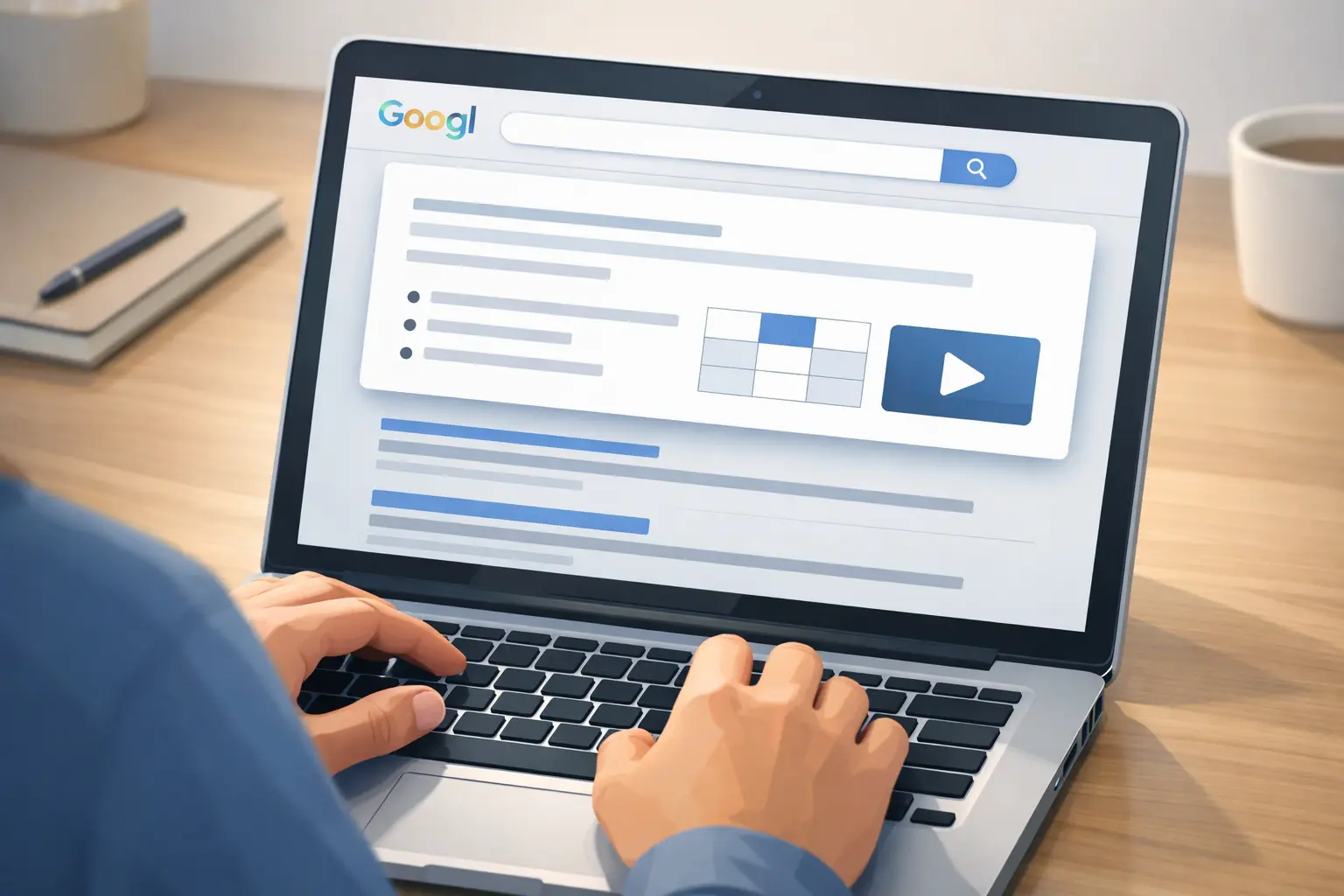
Featured snippets have become a critical focal point for SEO professionals, marketers, and content creators aiming to capture audience attention—without requiring a single click. Displayed at the top of Google’s search engine results page (SERP), featured snippets offer concise, direct answers to user queries, pulled from high-authority web pages. These answers often appear in formats like lists, tables, definitions, or step-by-step guides, providing users with immediate value.
This growing prevalence of zero-click searches—where users find what they need directly in the SERP without clicking through to a website—has transformed the way businesses approach SEO. Traditional tactics that once prioritized only click-through rates must now be paired with strategies that optimize content for visibility and authority within the snippet space.
With the help of artificial intelligence, marketers can now streamline the complex process of identifying, structuring, and optimizing content for snippet-worthy performance. From generating content that aligns with high-intent queries to formatting information in snippet-friendly layouts, AI—especially within platforms like Gryffin—offers a smarter, faster, and more scalable path to capturing that coveted “position zero.”
This article explores how AI-powered tools can support your content strategy for featured snippets, helping your brand stay visible, authoritative, and relevant in a zero-click world.
What Are Featured Snippets and How to Optimize for Them
Featured snippets are highlighted search results that appear at the top of Google's SERP—above the first organic listing and often beneath ads. Referred to as "position zero," these snippets are extracted from web pages that Google deems most relevant and authoritative for a particular query. Their purpose? To provide users with fast, accurate answers without requiring them to click through to another site.
There are several common formats for featured snippets:
Paragraph Snippets: Short blocks of text that answer a question directly (e.g., “What is content marketing?”).
List Snippets: Ordered or unordered lists that break down step-by-step processes or ranked items (e.g., “Top 5 SEO strategies” or “How to write a blog post”).
Table Snippets: Data-rich content displayed in table format (e.g., pricing comparisons or nutritional values).
Video Snippets: Embedded video content, often pulled from YouTube, that addresses how-to queries or product tutorials.
Each format aligns with different types of search intent, and optimizing your content to match these structures is key to being selected for a featured snippet.
What Are Zero-Click Searches and How They Impact Featured Snippet Optimization
Zero-click searches occur when users find the information they need directly on the SERP—eliminating the need to click through to a website. This behavior is largely driven by the rise of featured snippets, knowledge panels, and other enhanced search results like weather forecasts, local business listings, or stock prices.
For marketers, this shift presents both a challenge and an opportunity. On one hand, fewer clicks can mean reduced website traffic. On the other, being the source of a featured snippet significantly enhances brand visibility, trust, and authority. It signals to users—and to search engines—that your content is the most accurate and valuable on the topic. When done right, it positions your brand as the go-to resource, even without a click.
How User Intent Shapes Featured Snippet Optimization
Modern search behavior is increasingly driven by intent: users are looking for quick, reliable answers to specific questions. Whether searching on desktop or mobile, or using voice assistants, users expect content to be digestible, direct, and contextually relevant.
This has led to a strategic shift in SEO—away from keyword-stuffing and toward intent-focused content. Today’s high-performing content is designed to solve problems in the shortest time possible, and featured snippets are a reflection of this evolution. They're Google’s way of saying: “Here’s the best answer, right now.”
By understanding the types of questions your audience is asking—and leveraging AI to create structured, intent-matched content—you can dramatically increase your chances of owning those zero-click moments.
Why Featured Snippets Matter for SEO and Brand Visibility
At first glance, zero-click searches may seem like a threat to traditional SEO goals, especially when success is typically measured by traffic and conversions. However, the real power of featured snippets lies in their unmatched visibility. Appearing above the first organic result, a featured snippet gives your content the top spot in Google’s hierarchy—making it the first thing users see, even on mobile devices where screen space is limited.
This premium placement earns you a form of digital billboard space, allowing your brand to dominate SERPs without paying for ads. Even if users don’t click through, they’re engaging with your content—reading your answer, seeing your brand name, and potentially remembering your expertise. It’s high-impact visibility that drives brand recall, not just website traffic.
Build Authority and Trust Through Featured Snippet Optimization
Google doesn’t just select any content for featured snippets. It curates answers from pages it considers authoritative, trustworthy, and well-structured. That means landing a featured snippet isn’t just about SEO mechanics—it’s a signal that your content meets high standards of relevance, clarity, and accuracy.
Being chosen for a snippet positions your brand as a thought leader and problem-solver in your niche. Over time, consistent appearances in snippets can build trust with both your audience and search engines, reinforcing your domain authority. For service-based businesses or knowledge-driven brands, this can be a crucial differentiator in competitive spaces.
How to Win and Defend Position Zero Against Competitors
When you secure a featured snippet, you're not just appearing on the first page—you’re leapfrogging over competitors to occupy position zero. This gives you a critical edge, especially in crowded keyword spaces where outranking top competitors might otherwise require months of link-building and optimization.
Position zero allows you to bypass traditional ranking barriers and capture attention faster. It's particularly powerful when combined with AI tools like Gryffin, which help you reverse-engineer snippet structures and align your content with the latest search intent trends. In short, featured snippets give you a shortcut to visibility, authority, and influence—and with AI, that shortcut becomes much more accessible and repeatable.
Challenges and Pitfalls When You Optimize for Featured Snippets
While featured snippets present a powerful opportunity for visibility and authority, winning and maintaining them is not a simple task. The path to position zero is complex, nuanced, and constantly evolving—especially as Google refines its algorithms and user expectations shift. Understanding and overcoming these challenges is critical to developing a sustainable snippet strategy.
How Google Selects Featured Snippets: Factors and Signals
Google’s algorithms evaluate thousands of potential sources for any given query, and only one gets selected for the featured snippet. Unfortunately, there’s no official checklist or guaranteed formula. While we know factors like authority, relevance, clarity, and structured formatting play key roles, the exact snippet selection process remains largely opaque.
This makes it difficult for marketers to confidently predict which content will be featured. Even high-ranking pages might not secure the snippet spot if the content isn't clearly structured to answer the query directly. It’s a game of precision—and that’s where AI-powered platforms like Gryffin can make a difference. By analyzing high-performing snippet examples and reverse-engineering formatting and tone, AI can help tailor your content to increase its chances of selection.
How to Structure Content to Optimize for Featured Snippets
One of the most critical yet overlooked challenges in snippet optimization is aligning your content with the user’s true intent. Featured snippets are designed to answer specific questions quickly. If your content doesn't address the question concisely and in the right format—be it a paragraph, list, or table—it’s unlikely to be featured.
This requires a deep understanding of semantic search, natural language patterns, and user behavior. It also means thinking beyond keywords and focusing on how users phrase their queries—especially as voice search and mobile usage become more prevalent.
Using Gryffin’s AI-driven templates, marketers can structure content that directly answers target queries while following formatting best practices. Whether it’s framing a definition, outlining a step-by-step process, or presenting a comparison table, Gryffin helps ensure your content is both informative and snippet-ready.
How to Keep Your Featured Snippet Strategy Current With Algorithm Updates
Google’s algorithms are in a state of constant evolution. What earns a snippet today may not work tomorrow. Updates often impact how snippets are selected, whether duplicate snippets appear across devices, or how different formats (like video or images) are prioritized.
For marketers, this means staying static is not an option. Ongoing content audits and optimization are essential—but keeping up manually can be time-consuming and resource-intensive. This is where Gryffin’s AI becomes invaluable. By providing real-time SEO recommendations and automated audits, Gryffin enables teams to adapt faster to algorithm changes, making proactive rather than reactive content updates.
How to Use Gryffin to Optimize for Featured Snippets and Zero-Click SERPs
Gryffin is more than just an AI content generator—it’s a strategic engine purpose-built to help marketing teams optimize for performance across every stage of the funnel, including visibility within zero-click search results. When it comes to featured snippets, Gryffin combines real-time SEO intelligence, customizable workflows, and scalable content automation to position your content for “position zero” success.
How Gryffin’s AI Analyzes Pages for Featured Snippet Optimization
Gryffin’s AI continuously evaluates content against the structural and semantic elements Google looks for when selecting featured snippets. This includes identifying whether a query is best answered through a paragraph, numbered list, table, or Q&A format—and then recommending or generating that format accordingly.
Here’s how it works in practice:
Semantic Analysis: Gryffin uses natural language processing (NLP) to match content to high-intent queries that commonly trigger snippets.
Format Optimization: The system provides real-time formatting suggestions such as adding headers, bullet points, schema markup, and concise intros.
Gap Detection: Gryffin identifies underperforming pages that are ranking but not yet featured, and offers suggestions to enhance snippet eligibility.
The result? Instead of guessing at what might work, your content is backed by AI-driven insights tailored specifically for zero-click search performance.
Case Study: Optimize a “How to Create an SEO Content Brief” Post for a Featured Snippet
Let’s say a marketing agency wants to rank for the query: “How to create an SEO content brief.”
Using Gryffin, the team selects a blog template optimized for instructional queries. The platform then:
Prompts the user to input key details: target audience, tone, and primary keyword.
Auto-generates a step-by-step list with each step labeled using H2/H3 headers for optimal skimmability.
Inserts a short intro that directly answers the question in under 50 words—ideal for a paragraph snippet.
Implements schema markup and SEO metadata automatically based on the blog’s structure.
Once published, this blog not only ranks on page one but captures the featured snippet within weeks—driving brand visibility without relying on clicks.
How to Scale Featured Snippet Optimization With Workflows and CSV Imports
One of Gryffin’s greatest strengths is its ability to scale complex SEO tactics—like snippet optimization—across dozens or even hundreds of assets simultaneously.
Using Gryffin’s CSV import and customizable content workflows, teams can:
Upload bulk keyword sets associated with snippet opportunities.
Generate fully structured articles, FAQs, or comparison posts aligned with each keyword.
Apply consistent formatting, metadata, and internal linking strategies across every piece.
Distribute tasks across team members with built-in project management tools, keeping production fast and organized.
This automation eliminates repetitive formatting work and ensures every piece of content is built to perform in today’s zero-click search environment.
With Gryffin, marketers don’t just create content—they create content with a purpose. And in a world where visibility often ends at the search results page, that purpose is clear: own position zero, at scale.
FAQs Optimize For Featured Snippets
Q: What are featured snippets, and how do they work on Google’s results page? A: Featured snippets are answers that appear at the top of Google’s results (position zero), pulled from pages Google trusts as most relevant. They can show as a short paragraph, a list, a table, or a video. Their goal is to satisfy the query directly on the results page, improving visibility and signaling authority even without a click.
Q: What is a zero-click search, and why does it matter for content and SEO strategy? A: A zero-click search is when users get the answer on the results page and don’t visit a site. While this can reduce clicks, it increases brand exposure, trust, and perceived expertise. To compete, focus on intent-led, structured content that answers questions quickly and clearly.
Q: How do I structure a page to win a featured snippet? Tips for paragraph vs list vs table formats. A: Lead with a 40–60 word intro that directly answers the primary question. Match format to intent: a short paragraph for definitions, a numbered list for steps or rankings, and a labeled table for comparisons or data. Use clear H2/H3 headers, plain language, and add schema where relevant.
Q: Give me a step-by-step outline for an article designed to capture position zero for “how to create an SEO content brief.” A: Start with a 30–50 word intro that answers the query directly. Follow with numbered H2/H3 steps covering goals, audience, keywords, SERP analysis, outline, on-page requirements, distribution, and success metrics. Add a concise checklist, an FAQ block for related questions, and include schema, metadata, and internal links.
Q: Which AI tools can help me optimize content for featured snippets, and how do they do it? A: Gryffin is built for this use case: it uses NLP to map queries to the right format, suggests structure and headers, and flags pages that rank but don’t win the snippet. It offers real-time SEO guidance, automated audits, and workflows to create consistent, snippet-ready content. The result is faster alignment with query intent and format expectations.
Q: How can I find pages that rank but aren’t winning the featured snippet, and what should I change to fix that? A: Use Gryffin’s gap detection to identify pages that rank on page one without owning the snippet. Then tighten the intro to a direct 40–60 word answer, restructure content into the best-fit format (paragraph, numbered list, or table), add clear headers, and implement schema. Ensure the copy mirrors the query’s phrasing and solves the task in as few steps as possible.
Q: What Google algorithm changes affect featured snippets, and how should I update my content to keep up? A: Updates can shift how snippets are selected, whether results duplicate across devices, and which formats (text, video, images) get priority. Run ongoing audits, watch intent changes on your target SERPs, and refresh structure, wording, and schema as needed. Gryffin’s real-time recommendations and automated audits help teams stay proactive.
Q: Provide a checklist for formatting content to qualify for featured snippets, including headers, concise intros, schema, and internal links. A: Use a direct 40–60 word intro that answers the question. Mirror the query in H2/H3 headers, match the format to intent (paragraph, numbered list, or table), and keep sentences short. Add relevant schema (FAQ, HowTo, Article), optimize metadata, and include contextual internal links to supporting pages.
Q: How do I scale snippet-optimized content across many keywords using workflows or CSV imports? A: In Gryffin, upload keyword sets via CSV, then generate structured articles, FAQs, and comparisons aligned to each query’s intent. Apply consistent formatting, schema, metadata, and internal links through templates. Use built-in workflows to assign tasks and maintain quality across dozens or hundreds of assets.
Q: Show examples of queries that trigger paragraph, list, table, and video snippets, and explain how to tailor content for each format. A:
Paragraph: “What is content marketing?” → Provide a clear 40–60 word definition.
List: “How to write a blog post” or “Top 5 SEO strategies” → Use numbered steps or rankings with H2/H3 subheads.
Table: “SEO tool pricing comparison” → Present a labeled table with consistent columns.
Video: “How to tie a tie” or product tutorials → Script concise steps, add timestamps, and host on a platform Google surfaces.
At first, we weren’t even thinking about AI visibility. We were focused on rankings and traffic like everyone else. But once we started testing our brand in ChatGPT and other AI tools, we realized we were barely showing up — even for topics we ‘ranked’ for. Gryffin gave us a clear picture of where we stood, how competitors were being cited instead, and what that actually meant for our pipeline. It shifted how we think about search entirely.








.png)
.svg)
.svg)
.svg)


